Table of Contents
ToggleLearning how to practice mindfulness doesn’t require years of training or expensive retreats. It starts with a few minutes of focused attention each day. Mindfulness is the act of paying attention to the present moment without judgment. Research shows it reduces stress, improves focus, and supports emotional well-being. This guide breaks down practical mindfulness practices anyone can start today. Readers will learn specific techniques, tips for building consistency, and solutions for common obstacles. Whether someone has five minutes or thirty, these methods fit into any schedule.
Key Takeaways
- Mindfulness practices reduce stress, improve focus, and support emotional well-being—backed by research from Harvard and Johns Hopkins.
- Start with simple breathing exercises or body scan meditations for just 2–5 minutes daily to build a sustainable routine.
- Anchor your mindfulness practice to an existing habit (like brushing your teeth) to make it easier to stay consistent.
- A wandering mind during meditation isn’t failure—gently returning your attention to the breath is the actual practice.
- You don’t need special equipment or long sessions; informal mindfulness moments while washing dishes or waiting in line also count.
- Track your progress with a calendar or app to build momentum and maintain your mindfulness habit long-term.
What Is Mindfulness and Why Does It Matter
Mindfulness means paying full attention to what’s happening right now. It involves noticing thoughts, feelings, and physical sensations without labeling them as good or bad. The practice has roots in Buddhist meditation but has become secular and science-backed over the past few decades.
So why does mindfulness matter? Studies from institutions like Harvard and Johns Hopkins show that regular mindfulness practice changes brain structure. The prefrontal cortex, responsible for decision-making, becomes more active. The amygdala, which triggers stress responses, shows reduced activity.
Practical benefits include:
- Lower stress levels: Mindfulness reduces cortisol, the body’s main stress hormone.
- Better focus: Practitioners report improved concentration and fewer distractions.
- Emotional regulation: People who practice mindfulness respond to difficult emotions with more calm.
- Improved sleep: A quieter mind leads to better rest.
Mindfulness isn’t about emptying the mind or achieving some blissful state. It’s about showing up for life as it actually is. That’s surprisingly hard, and surprisingly rewarding.
Simple Mindfulness Techniques for Daily Life
Starting a mindfulness practice doesn’t require special equipment or hours of free time. These two techniques work well for beginners and take just five to ten minutes.
Breathing Exercises
Breathing exercises form the foundation of most mindfulness practices. They anchor attention to something happening right now, the breath.
Basic breath awareness:
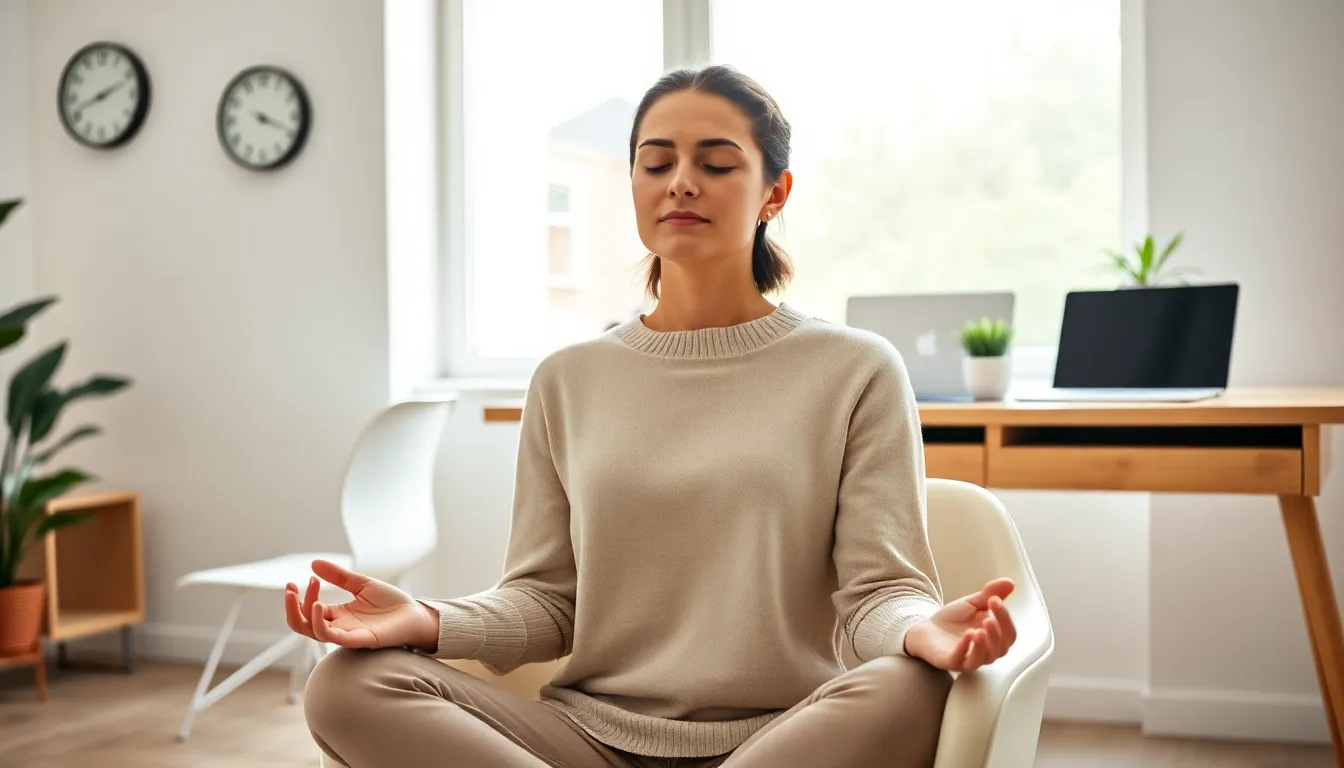
- Sit comfortably with feet flat on the floor.
- Close the eyes or soften the gaze downward.
- Breathe naturally through the nose.
- Notice the sensation of air entering and leaving the nostrils.
- When the mind wanders (it will), gently return attention to the breath.
Start with three minutes. Increase to five or ten as the practice feels more natural.
4-7-8 breathing offers a more structured approach:
- Inhale through the nose for 4 seconds.
- Hold the breath for 7 seconds.
- Exhale slowly through the mouth for 8 seconds.
- Repeat four times.
This technique activates the parasympathetic nervous system and calms the body quickly. It’s especially useful before stressful meetings or at bedtime.
Body Scan Meditation
Body scan meditation builds awareness of physical sensations. Many people carry tension without realizing it, tight shoulders, clenched jaws, shallow breathing.
How to do a body scan:
- Lie down or sit in a comfortable position.
- Close the eyes and take three deep breaths.
- Focus attention on the top of the head. Notice any sensations, tingling, warmth, pressure.
- Slowly move attention down through the face, neck, shoulders, arms, and hands.
- Continue through the chest, stomach, back, hips, legs, and feet.
- Spend 10-20 seconds on each body area.
- If tension appears, breathe into that spot and imagine it releasing.
A full body scan takes about 10-15 minutes. Shorter versions work too, even a quick check-in during lunch helps reset the nervous system.
How to Build a Consistent Mindfulness Routine
Knowing mindfulness techniques is one thing. Actually doing them regularly is another. Consistency matters more than duration. Five minutes every day beats thirty minutes once a week.
Anchor the practice to an existing habit. This is called habit stacking. Practice mindfulness after brushing teeth in the morning, during the commute (if not driving), or right before bed. The existing habit triggers the new one.
Start ridiculously small. The goal isn’t to meditate for an hour on day one. Start with two minutes. Once that feels easy, add a minute. Small wins build momentum.
Pick a consistent time. Morning works well for many people because it happens before the day’s demands take over. But any time works if it’s consistent. Some prefer midday mindfulness to reset after a stressful morning. Others use evening practice to wind down.
Create a dedicated space. This doesn’t need to be fancy. A specific chair, corner, or cushion signals to the brain: “This is where we focus.” Over time, simply sitting in that spot triggers a calmer state.
Track progress. A simple check mark on a calendar provides visual proof of consistency. Apps like Insight Timer or Headspace also track streaks and offer guided sessions.
Be flexible. Life happens. Missing a day doesn’t erase progress. The goal is building a sustainable practice, not achieving perfection.
Common Challenges and How to Overcome Them
Every beginner hits obstacles. Here are the most common challenges and practical solutions.
“My mind won’t stop racing.”
This is normal. Mindfulness doesn’t mean thinking stops. It means noticing when the mind wanders and bringing it back. Each return to the breath counts as a successful rep, like a bicep curl for the brain. A busy mind isn’t failure, it’s the workout.
“I don’t have time.”
Two minutes counts. So does one minute. Mindfulness can happen while washing dishes, waiting in line, or taking the first sip of coffee. Formal seated practice helps, but informal moments add up. Look for pockets of time rather than trying to find a perfect thirty-minute block.
“I get bored or restless.”
Boredom signals that the practice is working. The mind is used to constant stimulation, phones, notifications, background noise. Sitting still feels weird at first. Try shorter sessions or guided meditations to keep attention engaged. Restlessness decreases with practice.
“I fall asleep during meditation.”
This usually means the body needs rest. Try practicing earlier in the day, sitting upright instead of lying down, or meditating with eyes slightly open. Tiredness is also information worth noticing.
“I’m not sure if I’m doing it right.”
If someone is sitting, breathing, and noticing their experience, they’re doing it right. There’s no perfect meditation. The practice is about presence, not performance. Progress shows up gradually, slightly less reactive during stress, a bit more patient in traffic, a few extra seconds before snapping at someone.